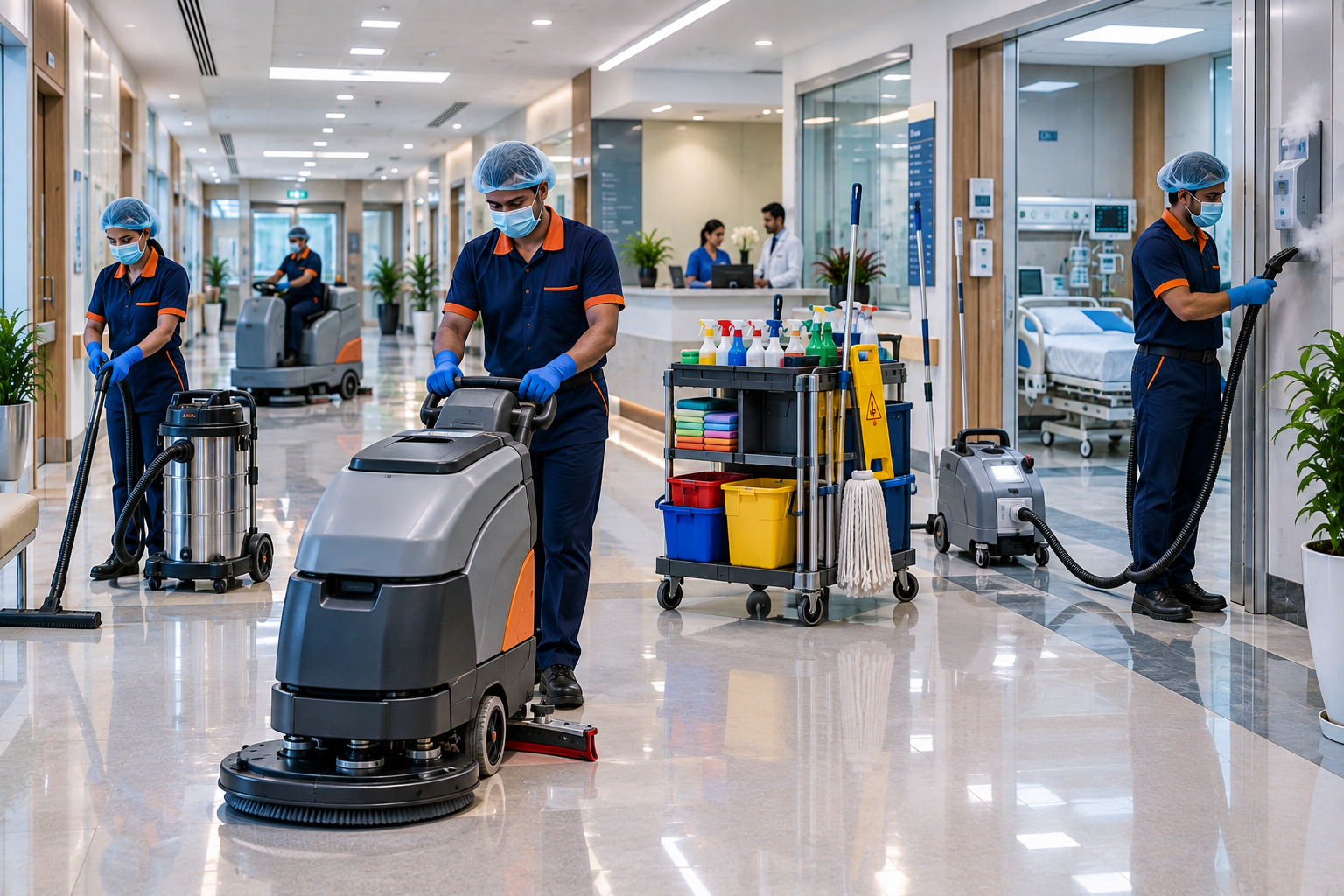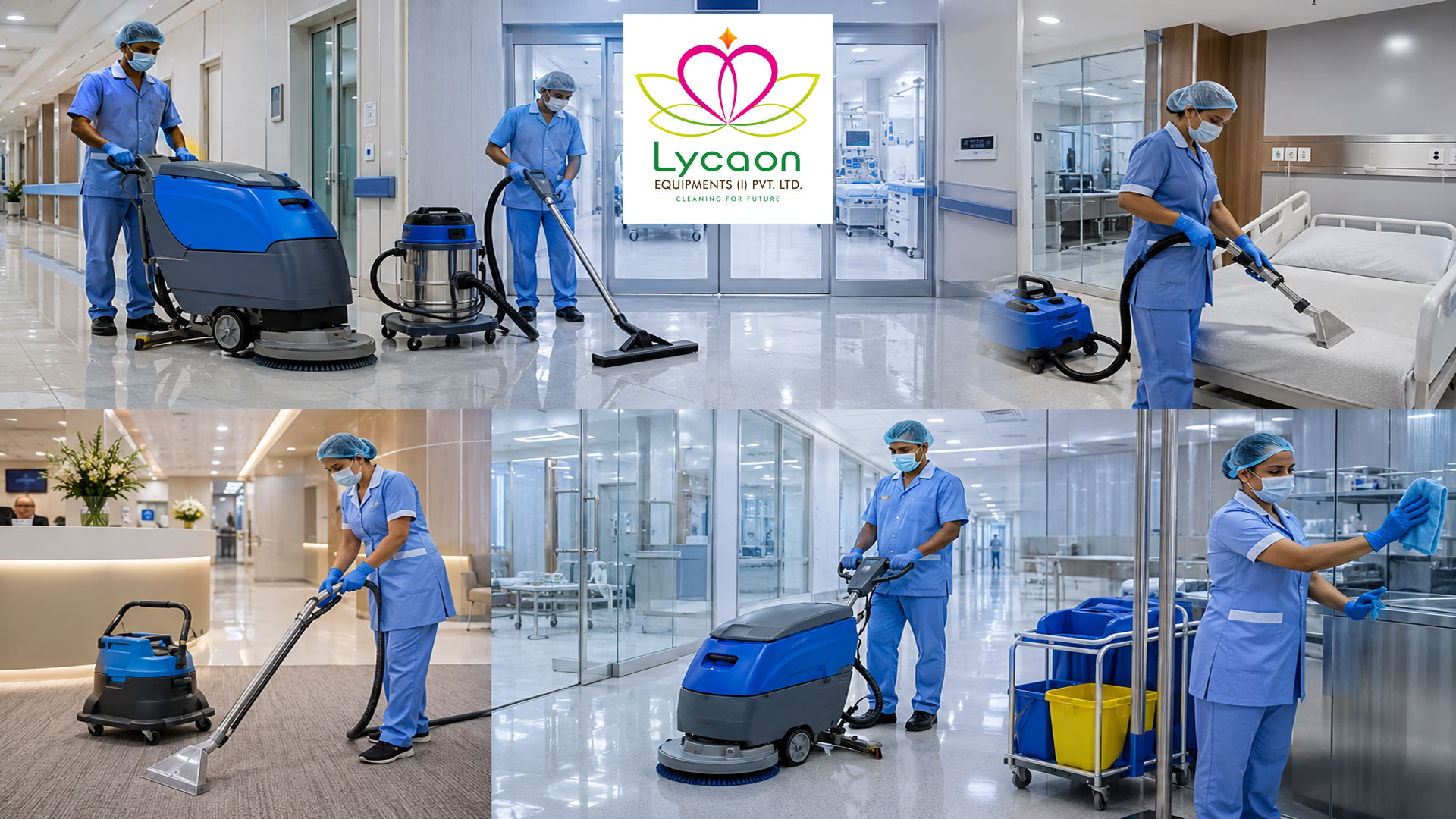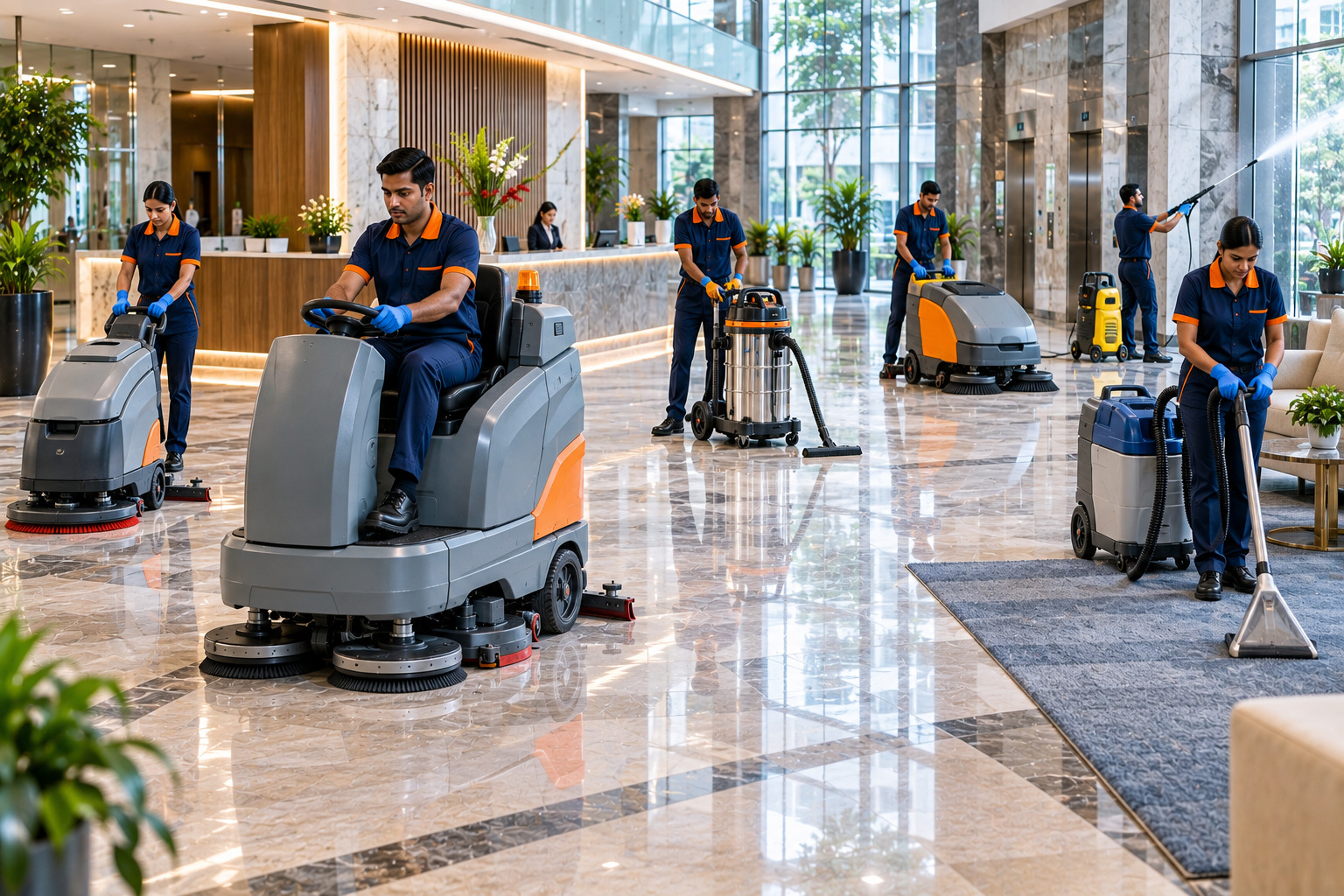

For offices, hotels, hospitals, shopping malls, warehouses, factories, and other large facilities, cleaning is a continuous operational requirement. Traditionally, a large housekeeping workforce was needed to clean extensive floor areas and manage repetitive tasks. Today, commercial cleaning machines can significantly improve productivity and help businesses control labour costs without compromising cleaning quality.
Mechanized cleaning does not necessarily mean replacing housekeeping staff. Instead, it allows the existing workforce to complete more work in less time, allocate employees to higher-value tasks, and maintain consistent cleaning standards.
1. Faster Cleaning of Large Areas
Machines such as ride-on and walk-behind floor scrubbers can clean large floor areas much faster than conventional manual mopping. A single operator can cover a substantial area efficiently, reducing the number of workers required for repetitive floor-cleaning activities.
This is particularly useful in shopping malls, airports, hotels, hospitals, warehouses, and corporate campuses with extensive flooring.
2. Higher Productivity Per Employee
Manual cleaning requires considerable time for mopping, scrubbing, vacuuming, and drying. Cleaning machines combine several processes into one operation. For example, a floor scrubber can scrub and recover dirty water during the same cleaning cycle.
As a result, housekeeping employees can complete more tasks during the same shift.
3. Reduced Physical Effort
Heavy manual scrubbing and repeated mopping can be physically demanding. Mechanized equipment reduces the amount of strenuous work required from housekeeping staff. This can help teams work more efficiently and spend less time on physically intensive cleaning activities.
4. Faster Floor Drying and Less Downtime
Modern scrubber-dryers remove dirty water immediately after cleaning. Faster drying means cleaned areas can often be returned to normal use sooner, reducing disruption in busy commercial facilities.
This is especially valuable in malls, hospitals, hotels, and offices where cleaning must be performed without significantly affecting daily operations.
5. Better Utilization of Manpower
Instead of assigning multiple employees to one large cleaning task, businesses can assign trained operators to cleaning machines while other staff focus on washrooms, dusting, waste management, glass cleaning, guest areas, or detailed housekeeping work.
This creates a more balanced and productive workforce.
6. Lower Long-Term Cleaning Costs
Although commercial cleaning machines require an initial investment, businesses should evaluate their total cost of ownership rather than only the purchase price. Reduced cleaning time, improved productivity, controlled water and chemical consumption, and lower dependence on repetitive manual work can contribute to long-term operational savings.
7. Consistent Cleaning Performance
Manual cleaning quality can vary depending on the employee, workload, and available time. Mechanized equipment provides more consistent cleaning results when operated and maintained correctly. Consistency can reduce the need for repeated cleaning and unnecessary labour hours.
How to Maximize Labour Savings
Businesses should select machines according to floor area, surface type, cleaning frequency, and operational requirements. Proper staff training, preventive maintenance, correct machine settings, and planned cleaning schedules are equally important for achieving maximum productivity.
Conclusion
Cleaning machines can play an important role in reducing labour costs while improving housekeeping productivity. Floor scrubbers, industrial vacuum cleaners, sweepers, carpet cleaning machines, and other professional equipment allow businesses to complete repetitive cleaning tasks faster and with fewer manual hours. The objective is not simply to reduce manpower, but to use employees and equipment more efficiently.
For facilities with large areas or high cleaning requirements, investing in the right commercial cleaning machines can deliver measurable improvements in productivity, cleaning quality, and long-term operational efficiency.