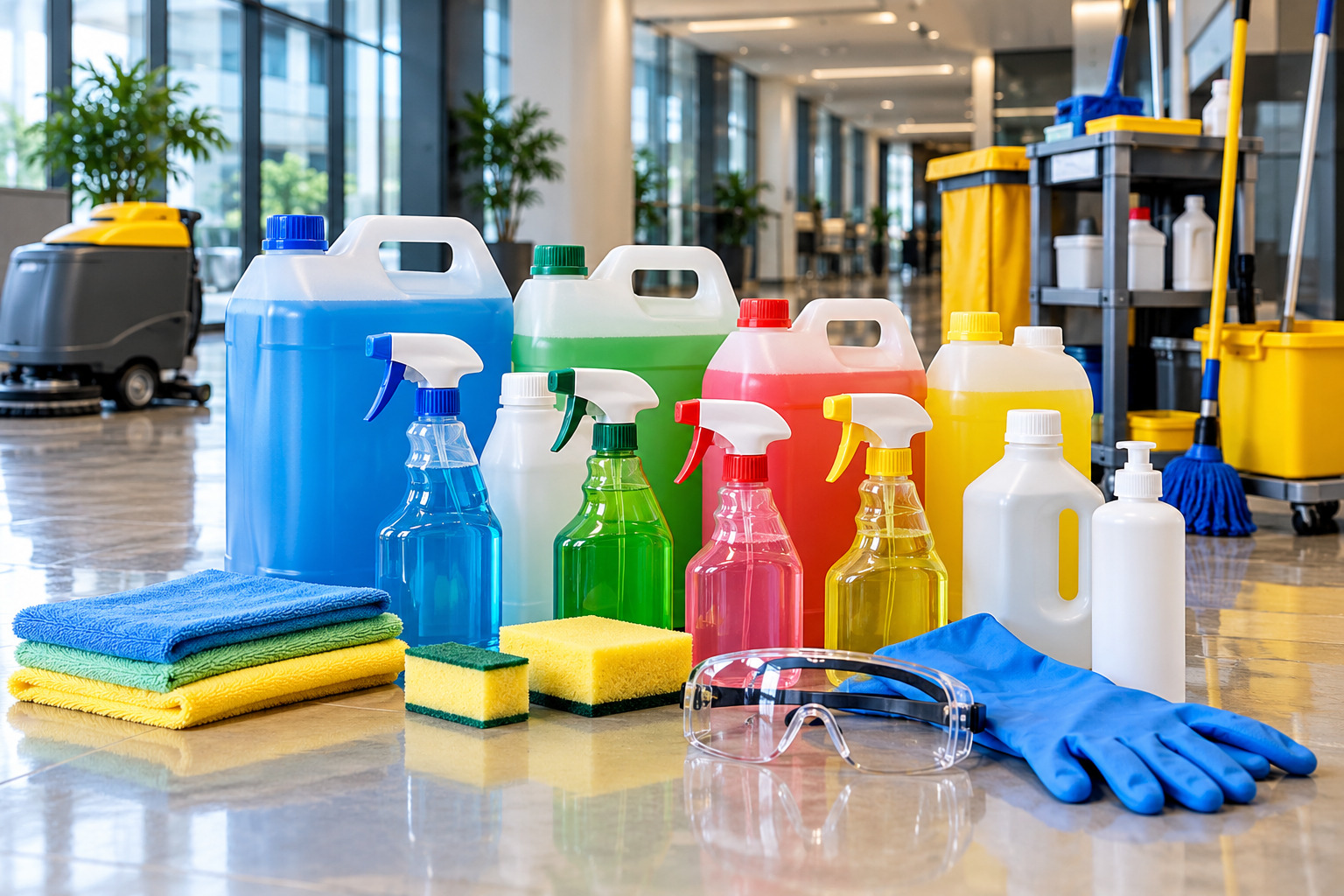
Cleaning chemicals play an essential role in maintaining hygiene, cleanliness and safety across commercial buildings, offices, hospitals, hotels, malls and industrial facilities. Choosing the right cleaning product helps remove dirt, grease, stains and harmful germs while protecting surfaces and improving cleaning efficiency.
Understanding Different Types of Cleaning Chemicals
1. All-Purpose Cleaners
These cleaners are suitable for everyday cleaning of desks, countertops, washable surfaces and general workplace areas. They are a practical choice for routine housekeeping.
2. Disinfectants and Sanitizers
Disinfectants are used on suitable surfaces to help control harmful microorganisms when applied according to product instructions. Sanitizers reduce microorganisms to specified levels. Always follow the label’s contact time and usage directions.
3. Floor Cleaners
Floor cleaning chemicals are designed for materials such as tiles, marble, vinyl and other compatible surfaces. Select products according to the flooring material to prevent dullness, stains or damage.
4. Degreasers
Degreasers help remove stubborn oil, grease and heavy soil from suitable kitchen, workshop and industrial surfaces. Check surface compatibility before application.
5. Glass Cleaners
Glass cleaners help remove fingerprints, dust and smudges from windows, mirrors and glass partitions, leaving a clear finish when used correctly.
6. Toilet and Bathroom Cleaners
These products help remove soap deposits, mineral stains and bathroom grime. Use only on compatible surfaces and never mix acidic toilet cleaners with bleach.
How to Choose the Right Cleaning Chemical
Before purchasing a cleaning product, identify the surface, type of dirt and cleaning requirement. Consider the product’s effectiveness, recommended dilution, material compatibility and suitability for the environment. Commercial facilities should also evaluate cleaning frequency, staff training requirements and the manufacturer’s safety instructions.
Essential Safety Tips for Using Cleaning Chemicals
Safety should always be a priority when handling cleaning products.
- Read the product label and Safety Data Sheet (SDS) before use.
- Wear appropriate personal protective equipment (PPE), such as gloves and eye protection.
- Never mix cleaning chemicals, especially bleach with acids or ammonia.
- Use the recommended dilution and ensure adequate ventilation.
- Store chemicals in clearly labelled original containers, away from food and unauthorized access.
- Train housekeeping staff in safe handling, spill response and proper disposal.
Why Professional Cleaning Chemicals Matter
Using suitable cleaning chemicals can improve cleaning efficiency, support hygiene standards, reduce unnecessary product wastage and help protect valuable surfaces. For facility management companies, selecting the right products is an important part of delivering consistent housekeeping and maintenance services.
Conclusion
Understanding cleaning chemical types, applications and safety requirements helps businesses maintain cleaner and safer environments. Whether you manage an office, hospital, hotel, shopping mall or industrial facility, choosing the right products and following manufacturer instructions can make everyday cleaning more effective.
Invest in suitable cleaning chemicals, train your cleaning team and follow a structured cleaning routine to achieve reliable results.
