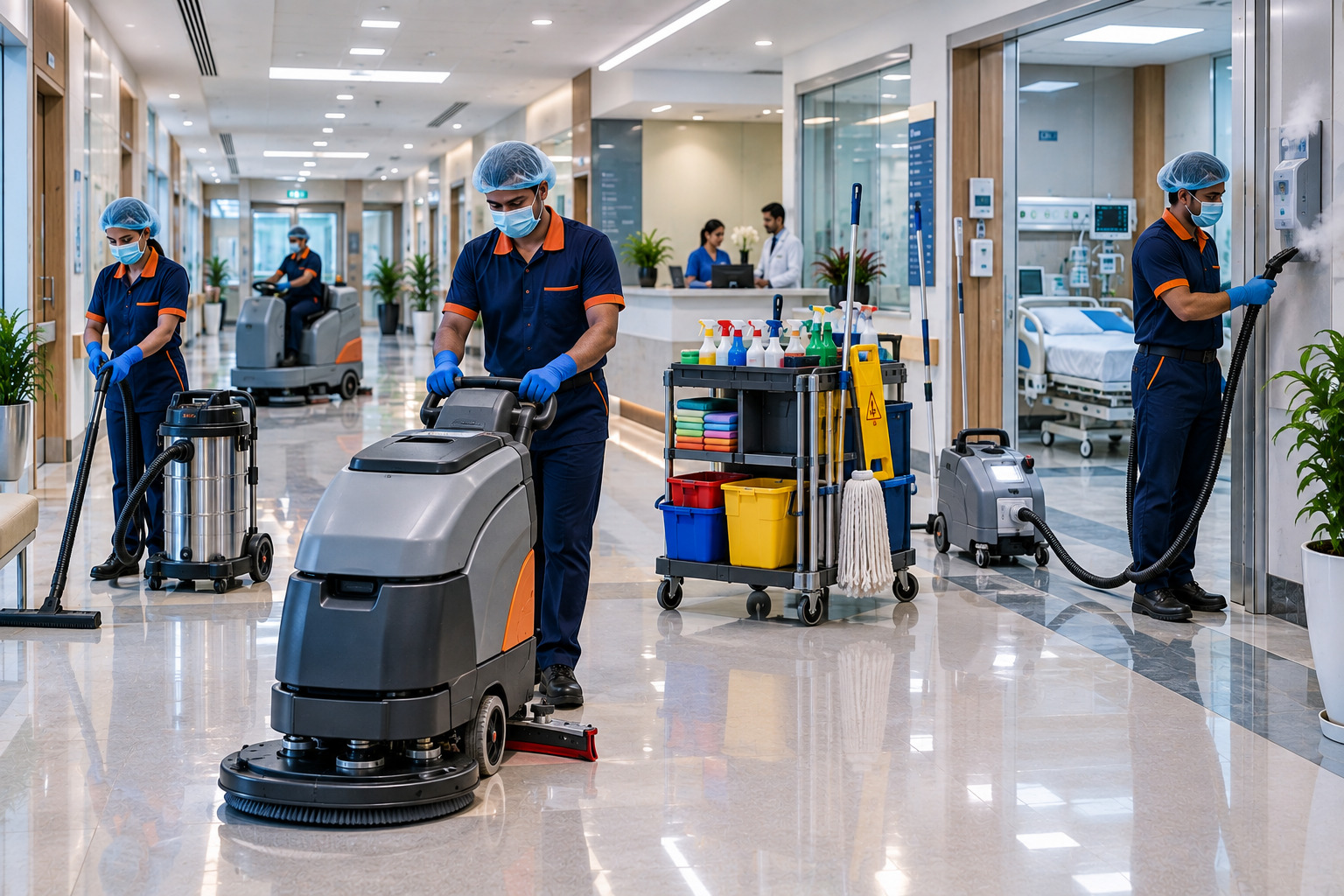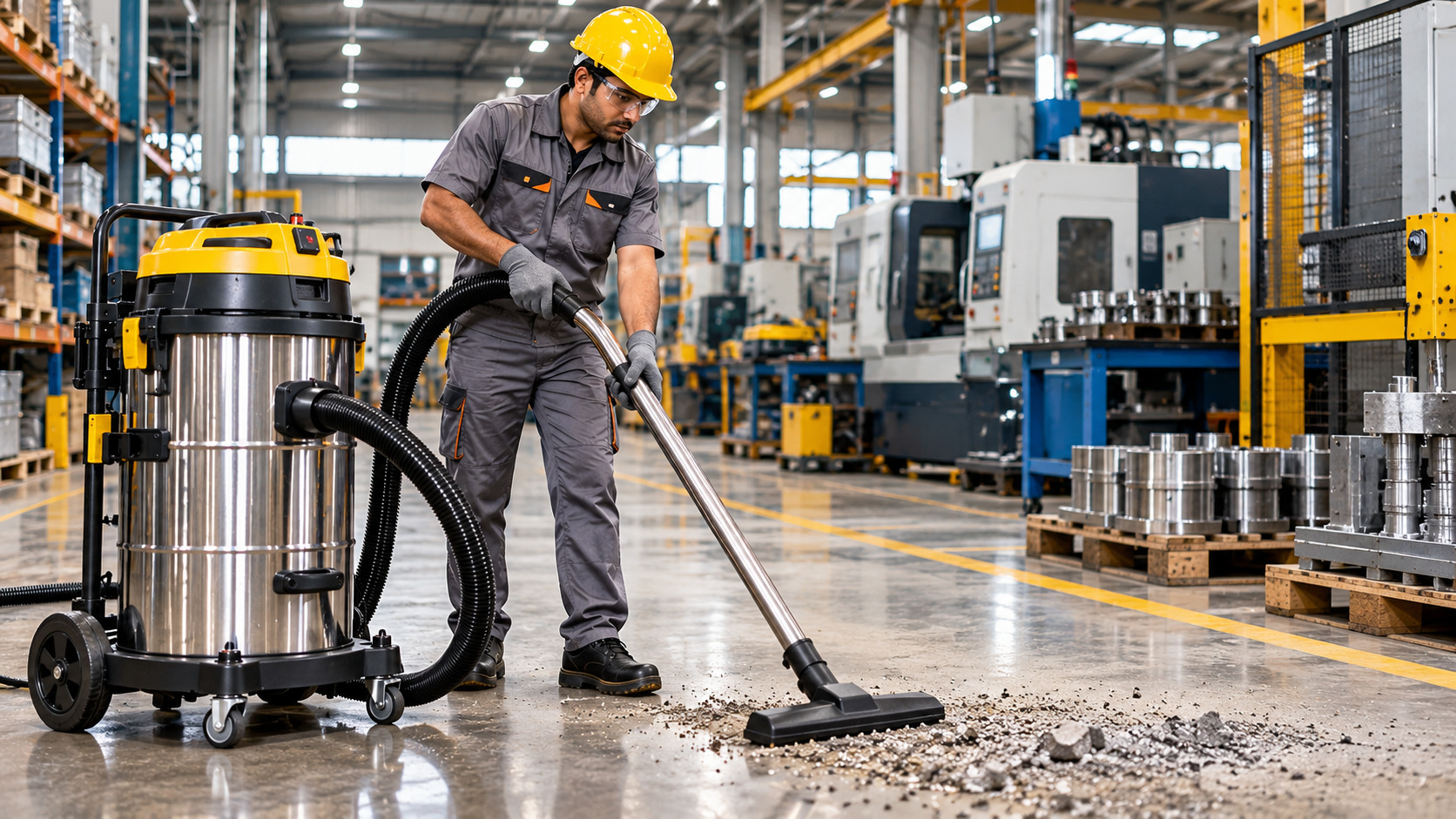
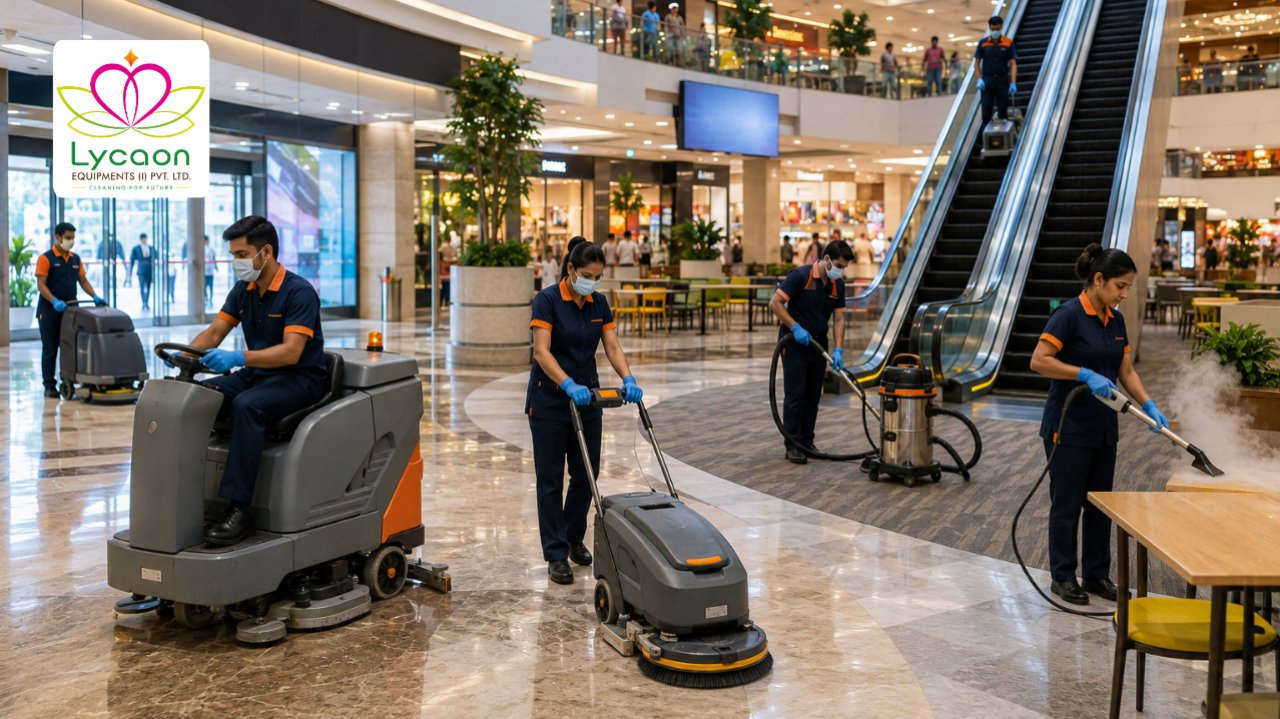
Maintaining large commercial floors manually can be time-consuming, labour-intensive, and difficult to manage consistently. A floor scrubber machine provides an efficient solution by combining floor scrubbing, washing, and water recovery into a streamlined cleaning process. These machines are widely used in offices, hospitals, hotels, shopping malls, warehouses, factories, airports, and other commercial facilities.
However, choosing the right floor scrubber requires careful consideration of the facility, flooring type, cleaning area, and daily workload.
What Is a Floor Scrubber Machine?
A floor scrubber is a professional cleaning machine designed to remove dirt, stains, dust, and other buildup from hard floors. Depending on the model, it can scrub the surface with rotating brushes or pads and recover dirty water through a suction system, leaving the floor cleaner and quicker to dry.
Types of Floor Scrubber Machines
Walk-Behind Floor Scrubber
Walk-behind scrubbers are compact and easy to maneuver. They are suitable for offices, hospitals, retail stores, hotels, schools, and medium-sized commercial areas where flexibility is important.
Ride-On Floor Scrubber
Ride-on models allow the operator to sit and drive the machine while cleaning. They are ideal for large shopping malls, warehouses, factories, airports, parking areas, and extensive commercial properties where productivity and faster coverage are priorities.
Single Disc Floor Machine
Single-disc machines are versatile equipment used for scrubbing, polishing, buffing, and maintaining suitable hard-floor surfaces. They can be a useful choice for facilities requiring multiple floor-care applications.
Key Factors to Consider Before Buying
1. Cleaning Area
Determine the total floor area that needs regular cleaning. Smaller spaces may benefit from compact walk-behind machines, while large facilities can achieve better productivity with ride-on models.
2. Floor Type
Different surfaces require different brushes, pads, pressure settings, and cleaning approaches. Consider whether the facility has marble, concrete, tiles, vinyl, terrazzo, or another suitable hard-floor surface.
3. Machine Size and Maneuverability
A larger machine may cover more area per hour, but it may not be practical in narrow corridors, crowded spaces, or areas with furniture. Choose a machine that balances productivity with maneuverability.
4. Battery and Power Requirements
Battery-operated scrubbers offer greater freedom of movement and avoid power cables across busy areas. Consider battery runtime, charging time, and replacement requirements before purchasing.
5. Water Tank Capacity
Larger tanks can reduce the frequency of refilling and emptying during extensive cleaning operations. However, tank capacity should be considered alongside machine size and facility requirements.
6. Maintenance and After-Sales Support
Check the availability of spare parts, brushes, pads, batteries, service support, and operator training. Reliable after-sales assistance can significantly improve the long-term value of a cleaning machine.
Benefits of Using a Floor Scrubber
A suitable floor scrubber can help businesses achieve faster cleaning, reduce manual effort, improve cleaning consistency, control water usage, and maintain safer, cleaner floors. Mechanized cleaning can also help housekeeping teams handle larger areas with better productivity.
Conclusion
Choosing the right floor scrubber machine depends on the size of the facility, floor type, cleaning frequency, maneuverability requirements, power source, tank capacity, and available service support. Instead of selecting a machine based only on price, businesses should evaluate performance, durability, maintenance requirements, and total cost of ownership. The right floor scrubber can become a valuable part of an efficient commercial cleaning and facility management operation.