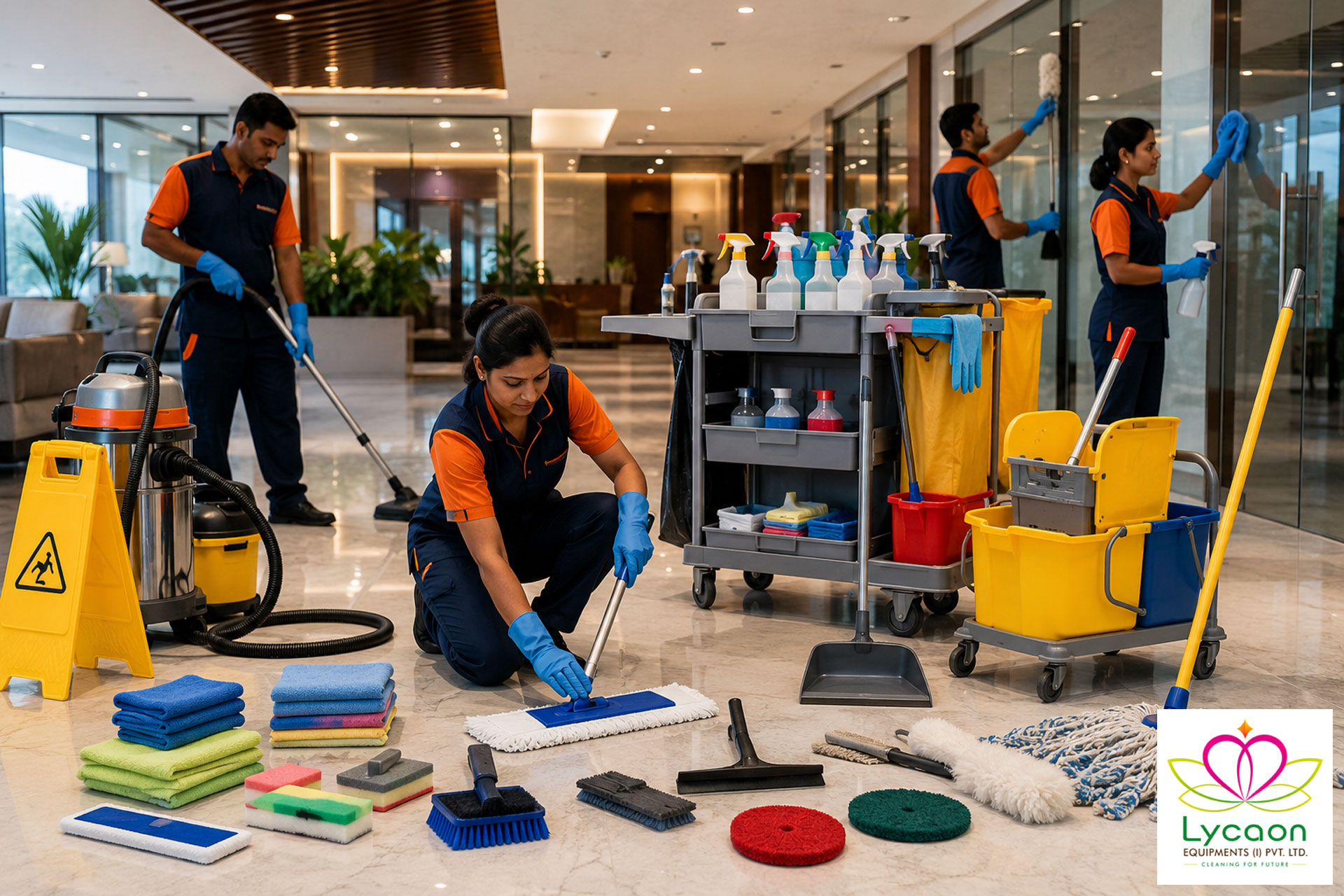
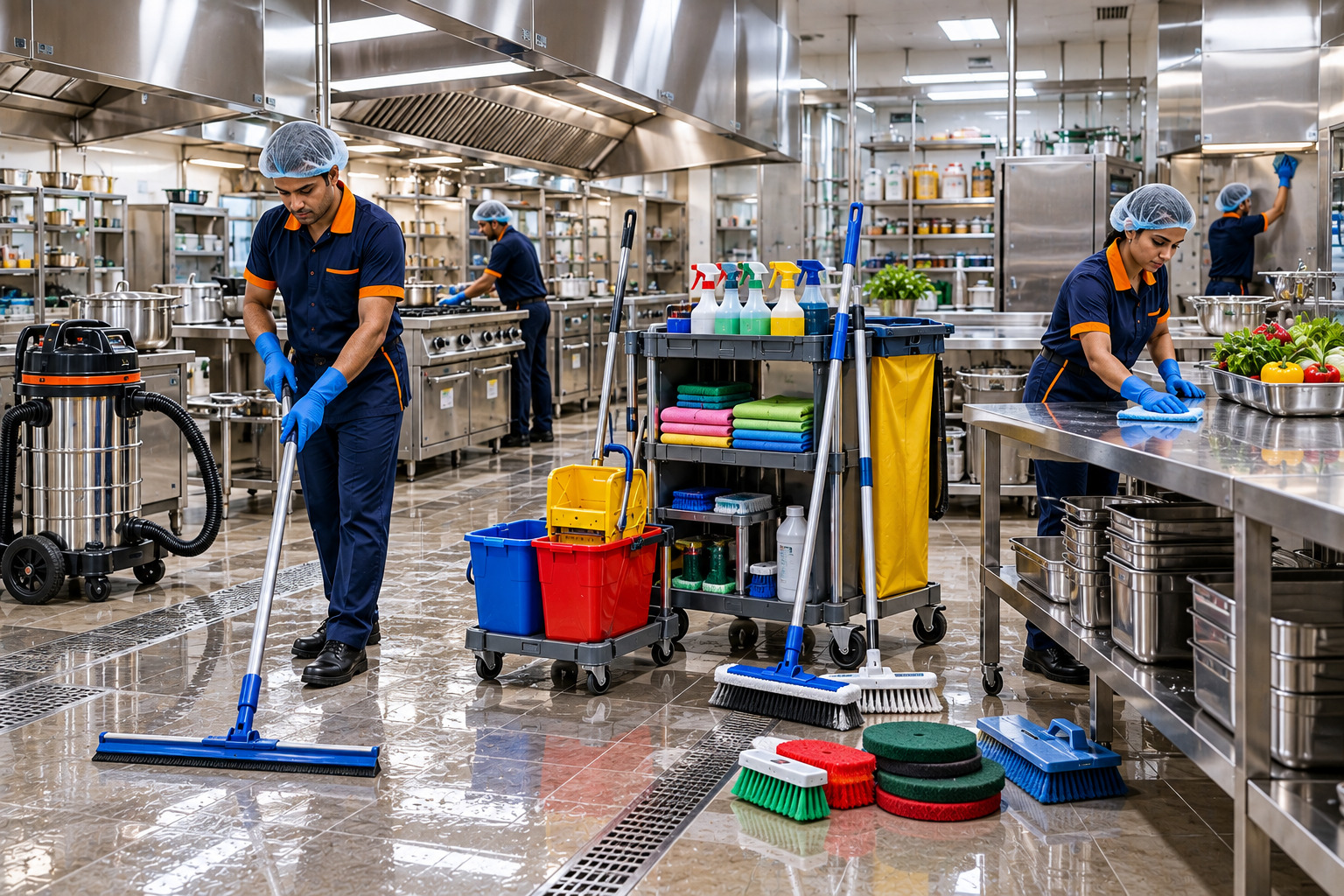
A clean and hygienic kitchen is essential for restaurants, hotels, hospitals, cafeterias, cloud kitchens, food courts, and commercial catering facilities. Grease, food residue, oil, stains, and moisture can accumulate quickly on floors, countertops, cooking areas, walls, and equipment. Using the right kitchen cleaning tools helps housekeeping and kitchen staff maintain hygiene efficiently while reducing manual effort.
Professional kitchen cleaning requires more than basic mops and cloths. A combination of specialized brushes, squeegees, microfiber tools, floor-cleaning equipment, and waste-management accessories can make daily cleaning more organized and effective.
Why Are Professional Kitchen Cleaning Tools Important?
Commercial kitchens operate continuously and often require cleaning several times throughout the day. Food spills and grease can create slippery surfaces and difficult-to-remove deposits. Proper cleaning tools help staff remove dirt efficiently while protecting suitable surfaces and equipment.
Choosing the right tool for each cleaning task can also improve productivity and reduce unnecessary use of water and cleaning chemicals.
Essential Kitchen Cleaning Tools
1. Heavy-Duty Floor Brushes
Floor brushes are useful for removing grease, food particles, and stubborn dirt from suitable kitchen floors. Different brush types can be selected according to floor texture and cleaning requirements.
2. Floor Squeegees
Heavy-duty floor squeegees help push excess water and cleaning solution toward drainage points. They are particularly useful after washing kitchen floors and can help reduce standing water.
3. Microfiber Cleaning Cloths
Microfiber cloths are useful for wiping counters, stainless-steel surfaces, tables, doors, and other suitable areas. Using designated or color-coded cloths can help organize cleaning activities and reduce inappropriate cross-use.
4. Scrub Brushes and Pads
Small hand brushes are useful for cleaning corners, grout lines, sinks, drains, and hard-to-reach areas. Appropriate scrubbing pads can help remove stubborn deposits from compatible surfaces without unnecessary abrasion.
5. Cleaning Buckets and Wringer Systems
Professional buckets with wringers make floor cleaning more efficient by controlling water and reducing manual effort. Dual-bucket systems can also help separate clean and used water during mopping.
6. Spray Bottles and Chemical Dispensing Tools
Properly labeled spray bottles and measuring or dilution equipment help staff apply cleaning solutions consistently. Cleaning chemicals should always be used according to the manufacturer’s instructions.
7. Wet & Dry Vacuum Cleaner
Commercial Wet & Dry Vacuum Cleaners can be useful for removing suitable liquid spills, dust, debris, and water from designated kitchen areas. They can improve cleaning speed where manual collection is inefficient.
8. Cleaning Trolley
A professional cleaning trolley keeps cloths, brushes, mops, cleaning solutions, waste bags, gloves, and other supplies organized. This reduces unnecessary movement and makes routine cleaning more efficient.
Kitchen Cleaning Safety Tips
Kitchen cleaning tools should be cleaned and stored properly after use. Staff should wear suitable PPE, use chemicals according to label instructions, avoid mixing incompatible chemicals, and place appropriate warning signs around wet floors. Electrical cleaning equipment should be operated according to the manufacturer’s safety instructions and kept away from unsuitable wet conditions.
How to Choose the Right Tools
Consider the size of the kitchen, type of flooring, amount of grease and food residue, cleaning frequency, drainage arrangement, surface materials, and available storage space. Durable commercial-grade tools are generally more suitable for high-frequency professional cleaning than basic household alternatives.
Conclusion
The right kitchen cleaning tools are essential for maintaining hygienic, safe, and efficiently managed commercial kitchens. Heavy-duty brushes, floor squeegees, microfiber cloths, scrub pads, mop systems, wet and dry vacuum cleaners, spray bottles, and cleaning trolleys each have an important role in daily housekeeping operations. When combined with suitable cleaning chemicals, machines, trained staff, and proper procedures, these tools can support consistent kitchen hygiene and efficient facility management.