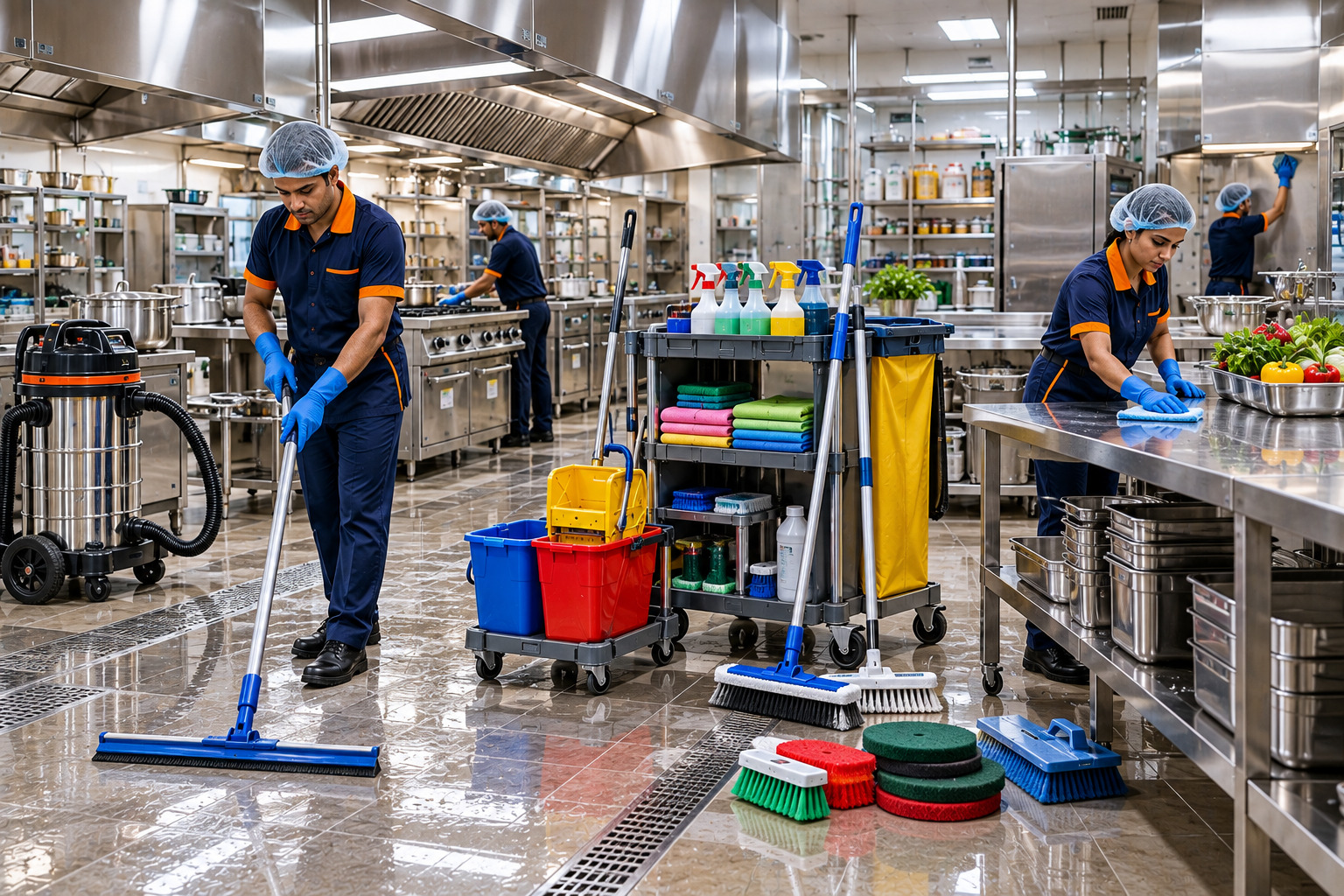

Hospitals require a higher level of cleanliness than most commercial facilities because patients, healthcare workers, and visitors depend on a safe and hygienic environment. From patient rooms and corridors to operation areas, waiting halls, washrooms, laboratories, and common spaces, every area requires systematic cleaning. The right cleaning tools for hospitals help housekeeping teams perform these tasks efficiently while supporting hygiene and infection-control practices.
Professional hospital cleaning does not depend only on chemicals or cleaning machines. Everyday tools such as microfiber mops, color-coded cloths, buckets, brushes, squeegees, and cleaning trolleys are equally important.
Why Are Professional Cleaning Tools Important in Hospitals?
Hospitals experience continuous foot traffic and frequent cleaning requirements. Poorly selected or improperly used tools can reduce cleaning efficiency and may increase the risk of cross-contamination. Professional tools help housekeeping teams maintain organized cleaning processes and separate equipment according to different areas.
Durable and ergonomic tools can also reduce physical effort, improve productivity, and support consistent housekeeping standards.
Essential Cleaning Tools for Hospitals
1. Microfiber Cleaning Cloths
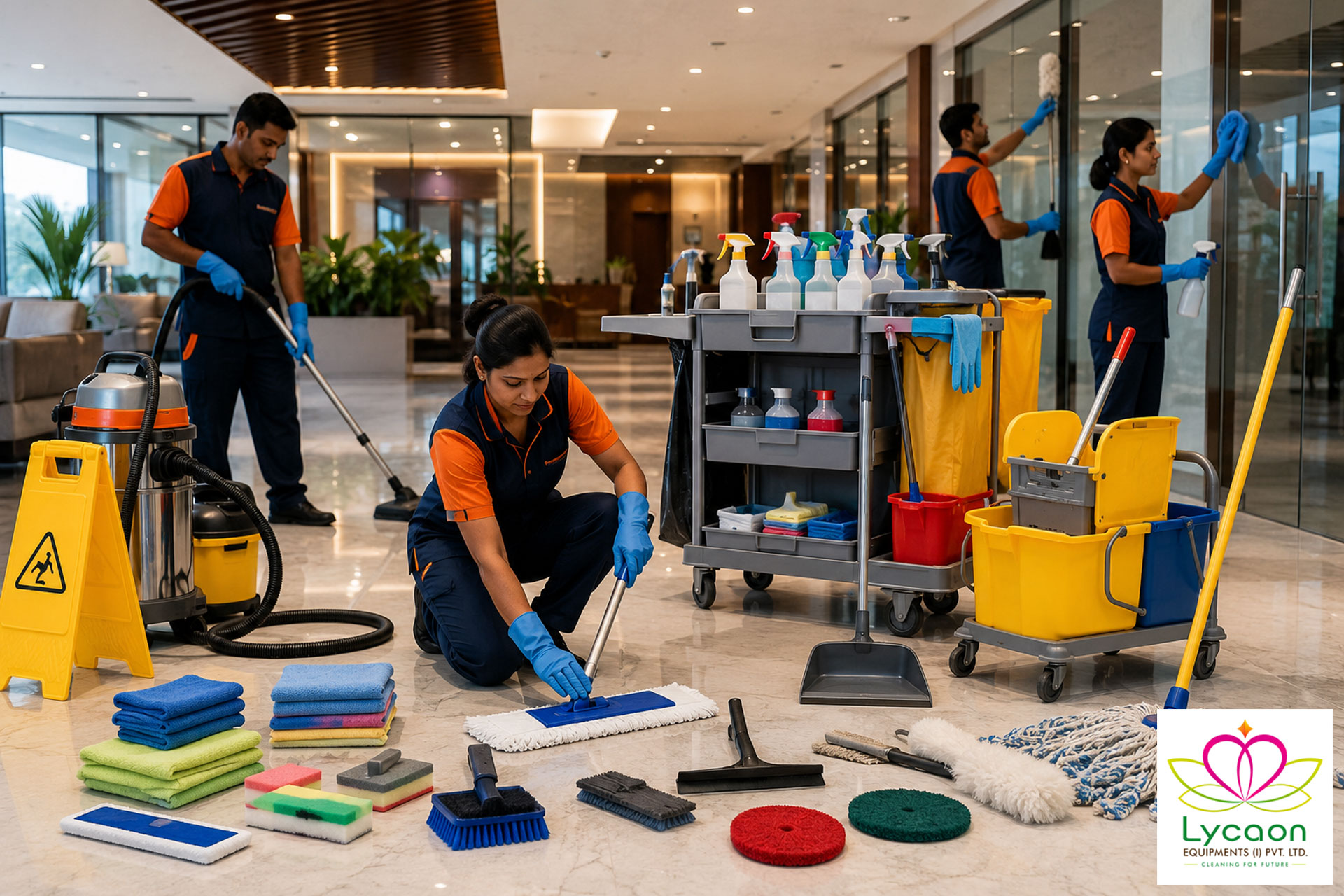
High-quality microfiber cloths are useful for cleaning furniture, counters, glass, doors, equipment exteriors, and other suitable surfaces. Color-coded cloths can help housekeeping teams assign different cloths to specific areas and reduce the possibility of cross-use.
2. Flat Microfiber Mop Systems
Flat microfiber mops are suitable for corridors, patient rooms, offices, and other hospital areas. Their lightweight design makes them easy to maneuver around beds, furniture, and equipment while providing effective surface cleaning.
3. Kentucky Mops
Kentucky mops are useful for absorbing spills and cleaning larger floor areas. They can be particularly helpful in corridors, entrances, utility areas, and other spaces where quick removal of moisture is required.
4. Dual-Bucket Mop Systems
A dual-bucket system separates clean and used water during mopping. This can improve cleaning efficiency and help housekeeping teams follow better hygiene procedures.
5. Cleaning Trolleys
A professional cleaning trolley allows housekeeping staff to carry microfiber cloths, mop heads, cleaning solutions, waste bags, gloves, and other supplies in an organized manner. It reduces unnecessary movement and improves productivity.
6. Floor Brushes and Scrub Pads
Different brushes and suitable floor pads can be used for tiles, grout, washrooms, corners, and other hard surfaces. Selecting the correct accessory for the surface is important to avoid damage.
7. Glass Cleaning Tools
Squeegees, window washers, telescopic handles, and microfiber glass cloths help maintain windows, mirrors, partitions, and glass doors without unnecessary streaks.
8. Waste Collection Equipment
Waste collection carts, color-coded bins, garbage bags, and litter-picking tools support organized waste handling throughout the hospital. Waste should always be managed according to the facility’s applicable procedures and requirements.
Important Considerations When Choosing Hospital Cleaning Tools
Hospitals should consider durability, ease of cleaning, ergonomics, color coding, surface compatibility, replaceable components, and compatibility with existing cleaning procedures. Tools should be cleaned, maintained, and stored appropriately after use.
Housekeeping personnel should also receive proper training on tool selection, cleaning procedures, PPE, chemical handling, and prevention of cross-contamination.
Conclusion
The right cleaning tools for hospitals form an essential part of an effective housekeeping system. Microfiber cloths, flat mops, Kentucky mops, dual-bucket systems, cleaning trolleys, brushes, scrub pads, glass-cleaning tools, and waste collection equipment help teams maintain cleaner and more organized healthcare environments. When combined with appropriate cleaning machines, chemicals, training, and standard operating procedures, professional cleaning tools can significantly improve housekeeping efficiency and support a safer environment for patients, visitors, and healthcare professionals.