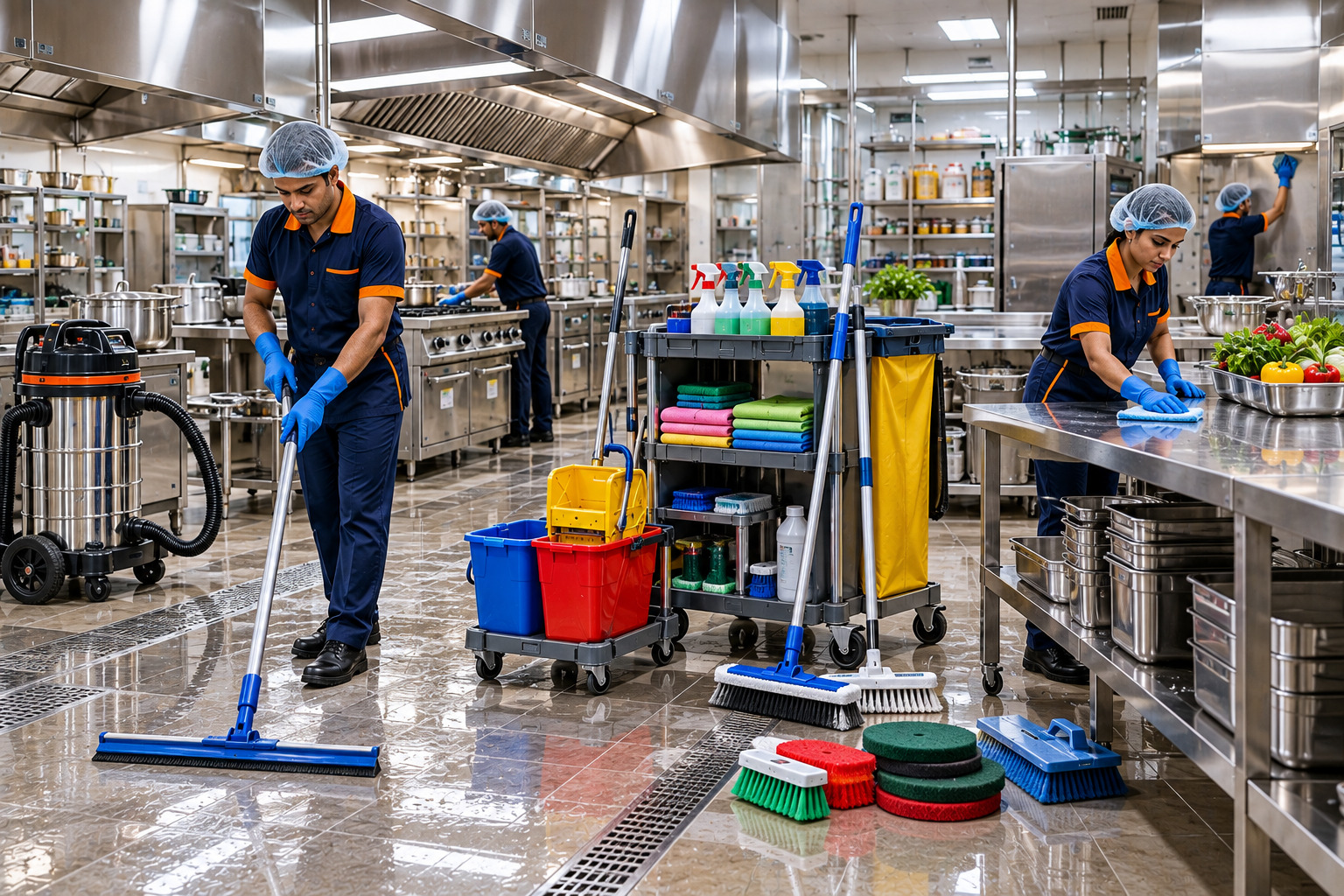
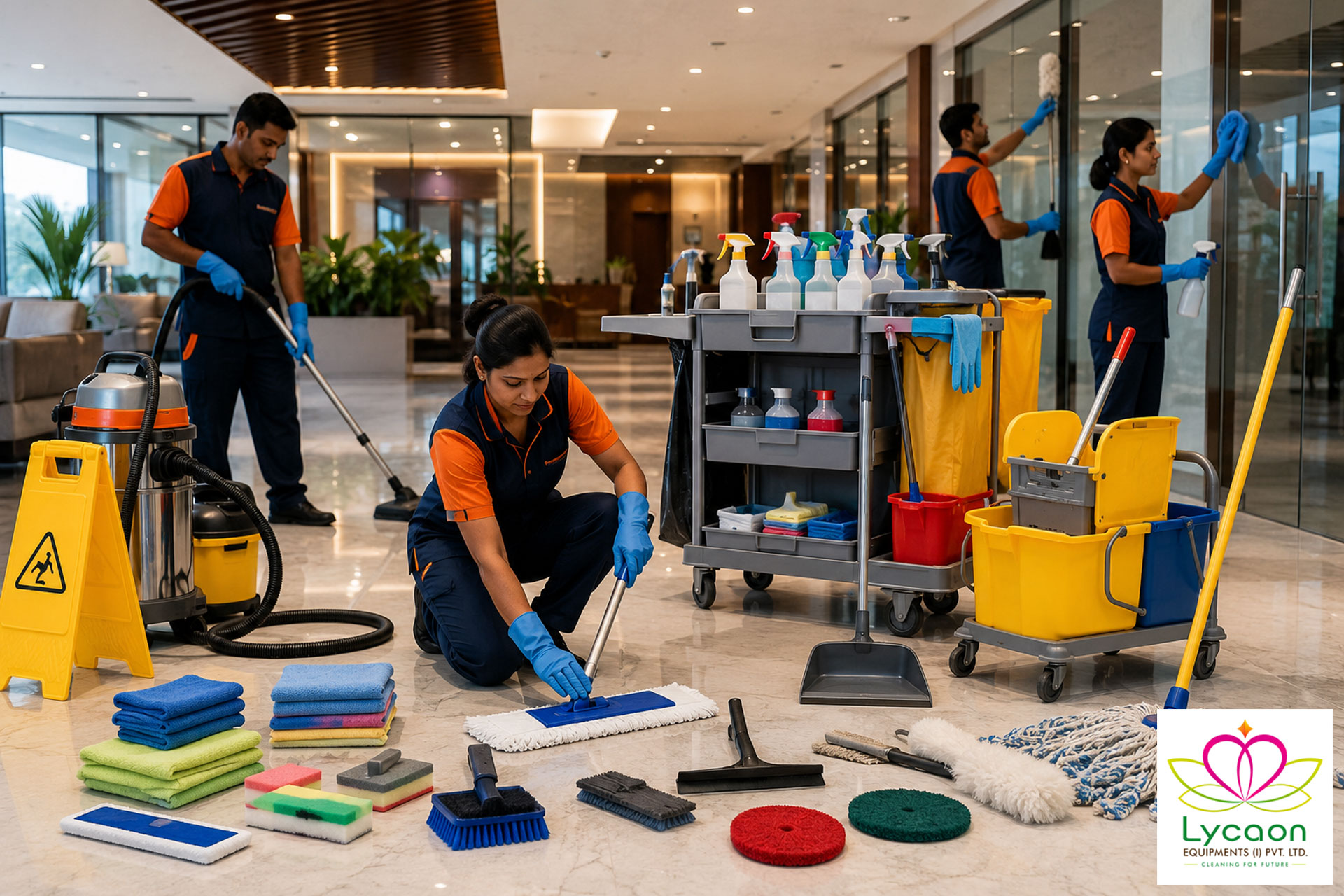
A professional housekeeping team is only as effective as the tools it uses. Whether maintaining a corporate office, hospital, hotel, shopping mall, educational institution, or industrial facility, having the right cleaning tools ensures better hygiene, faster operations, and consistent cleaning results. While advanced cleaning machines improve productivity, everyday cleaning accessories remain the backbone of routine housekeeping tasks.
Using high-quality cleaning tools not only reduces manual effort but also helps maintain workplace cleanliness, improve safety, and extend the life of furniture, flooring, and other assets.
Why Quality Cleaning Tools Matter
Professional housekeeping involves cleaning different surfaces, corners, glass panels, washrooms, furniture, and high-touch areas every day. Using durable and ergonomically designed tools improves cleaning efficiency while minimizing physical strain on housekeeping staff. Proper tools also reduce water and chemical consumption, making cleaning operations more sustainable and cost-effective.
Essential Cleaning Tools Every Team Should Have
1. Microfiber Cloths
Microfiber cloths are indispensable for dusting and wiping surfaces. They effectively trap dust, dirt, and bacteria without scratching delicate surfaces such as glass, stainless steel, wood, and electronic equipment.
2. Professional Mop System
Flat mops, microfiber mops, and Kentucky mops are widely used for cleaning floors in commercial buildings. Modern mop systems provide better water absorption, faster drying, and improved hygiene compared to traditional mops.
3. Cleaning Trolley
A housekeeping trolley helps staff carry cleaning chemicals, waste bags, microfiber cloths, tools, and consumables efficiently. It increases productivity by keeping all essential supplies organized and easily accessible.
4. Buckets with Wringer
Dual-bucket systems separate clean and dirty water, reducing cross-contamination while improving floor cleaning efficiency. Wringer buckets also minimize water usage and reduce operator fatigue.
5. Brushes and Scrubbing Pads
Different types of brushes are required for washrooms, tile grout, corners, carpets, and hard-to-reach areas. Heavy-duty scrubbing pads effectively remove stubborn stains without damaging surfaces.
6. Glass Cleaning Tools
Professional squeegees, window washers, extension poles, and glass microfiber cloths ensure streak-free cleaning of windows, partitions, mirrors, and glass doors.
7. Dusting Equipment
Microfiber dusters, telescopic dusters, cobweb removers, and feather dusters help clean ceilings, fans, light fixtures, furniture, and elevated surfaces safely.
8. Waste Collection Tools
Color-coded dustbins, garbage bags, litter pickers, and waste collection carts support effective waste management while maintaining cleanliness across facilities.
Benefits of Professional Cleaning Tools
Using premium housekeeping tools offers several advantages:
- Faster and more efficient cleaning
- Better hygiene and sanitation
- Reduced physical effort for staff
- Lower maintenance costs
- Improved workplace safety
- Longer life of flooring and furniture
- Professional cleaning results
- Enhanced customer satisfaction
Tips for Maintaining Cleaning Tools
To maximize performance, cleaning tools should be washed and disinfected regularly. Microfiber cloths should be cleaned after every use, mop heads replaced when worn, brushes sanitized, and cleaning trolleys inspected frequently. Proper storage in dry, ventilated areas helps extend the lifespan of housekeeping equipment and prevents bacterial growth.
Conclusion
Every successful housekeeping operation depends on having the right cleaning tools. From microfiber cloths and professional mop systems to cleaning trolleys, brushes, and glass cleaning equipment, each tool contributes to maintaining a clean, safe, and hygienic environment. Investing in high-quality housekeeping equipment not only improves productivity but also ensures consistent cleaning standards across commercial, healthcare, hospitality, and industrial facilities.