
Cleaning is an essential part of maintaining a healthy and presentable environment, but the tools used for cleaning can vary greatly depending on the size and purpose of the space. Professional cleaning tools are designed for demanding commercial environments, while household cleaning tools are generally intended for smaller residential cleaning tasks. Understanding the difference can help businesses choose the right equipment for better efficiency and cleaning results.
What Are Household Cleaning Tools?
Household cleaning tools are designed for everyday residential use. Common examples include basic mops, brooms, dustpans, buckets, sponges, microfiber cloths, small brushes, and handheld dusters. These tools are affordable, lightweight, and easy to store, making them suitable for homes and small spaces.
However, they may not be suitable for facilities that require frequent cleaning, large-area coverage, or intensive cleaning operations.
What Are Professional Cleaning Tools?
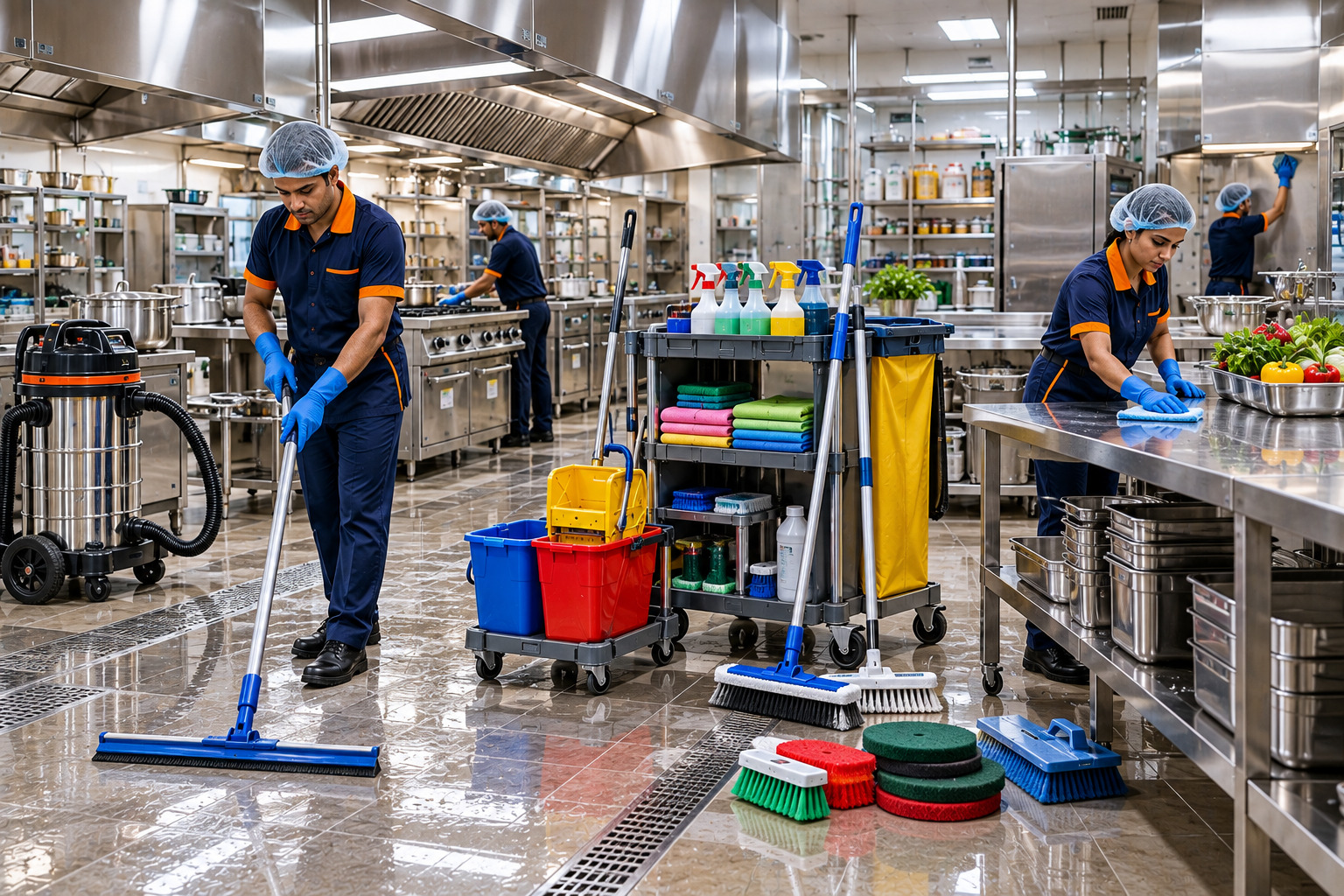
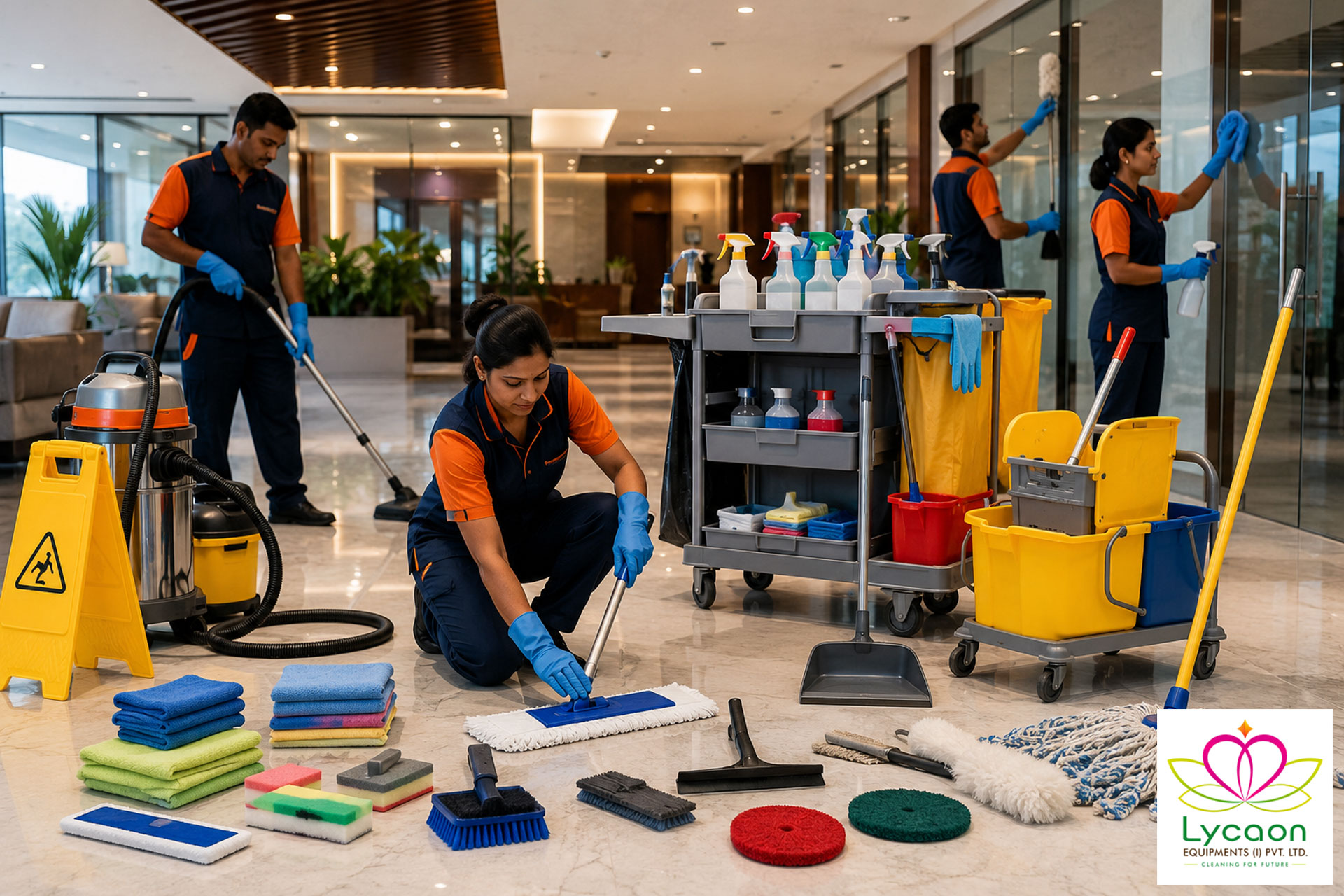
Professional cleaning tools are specifically designed for commercial and industrial applications. They include heavy-duty microfiber systems, commercial mop systems, cleaning trolleys, dual buckets with wringers, floor squeegees, specialized brushes, scrubbing pads, glass cleaning equipment, and other professional housekeeping accessories.
These tools are built to withstand frequent use and help housekeeping teams clean large areas more efficiently.
Key Differences Between Professional and Household Tools
1. Durability
Professional cleaning tools are generally made from stronger materials and are designed for repeated daily use. Household tools are better suited to lighter and less frequent cleaning.
2. Cleaning Efficiency
Commercial cleaning tools are designed to improve productivity. For example, a professional mop system can cover larger areas efficiently, while specialized brushes and squeegees can make detailed cleaning faster.
3. Ergonomics
Professional tools often feature adjustable handles, lightweight designs, and ergonomic construction to reduce physical strain during long cleaning shifts.
4. Hygiene and Color Coding
Professional housekeeping operations commonly use color-coded cleaning tools to help separate equipment for different areas and reduce the risk of cross-contamination. This is particularly important in hospitals, hotels, restaurants, and other high-traffic facilities.
5. Compatibility with Commercial Operations
Professional cleaning accessories can be integrated with cleaning trolleys, floor-cleaning machines, and facility management systems. This creates a more organized and efficient cleaning workflow.
Where Should Professional Cleaning Tools Be Used?
Professional cleaning tools are particularly useful in:
- Hotels and resorts
- Hospitals and healthcare facilities
- Corporate offices
- Shopping malls
- Schools and colleges
- Warehouses
- Manufacturing facilities
- Restaurants and commercial kitchens
- Residential societies
Which One Should You Choose?
For a home, household cleaning tools are usually sufficient. However, businesses managing large premises or high daily footfall should consider professional cleaning tools. The right choice depends on floor area, cleaning frequency, surface type, hygiene requirements, and the workload of the housekeeping team.
Conclusion
The main difference between professional cleaning tools and household cleaning tools is their intended application, durability, efficiency, and ability to handle demanding cleaning schedules. While household tools work well for routine residential cleaning, professional tools offer better productivity and organization for commercial facilities.
For businesses looking to maintain consistent housekeeping standards, investing in quality professional cleaning tools can improve cleaning efficiency, reduce physical effort, and support a safer and more hygienic environment.